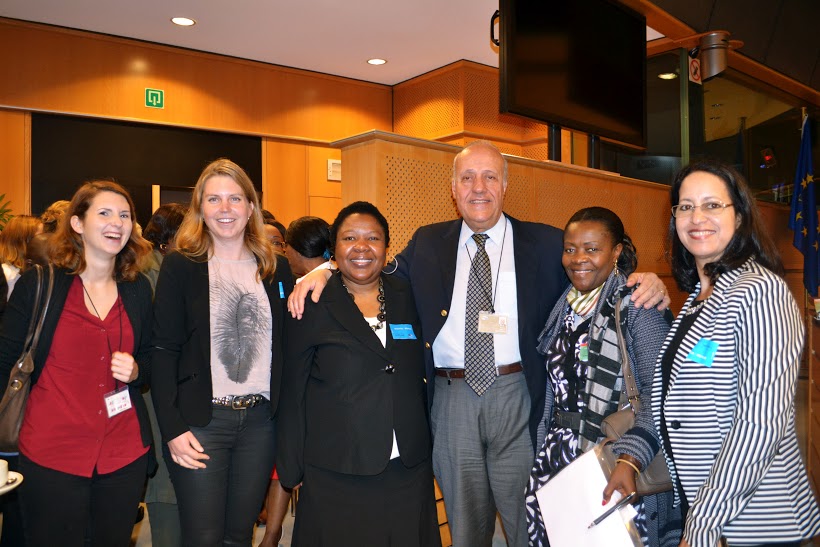
 The conference was an initiative of The Food Bridge vzw, organized in collaboration with African Diaspora Network Europe, The Federation of Anglophone Africans Belgium, Actalliance EU and The FAO Brussels Office. It was hosted by MEP Louis Michel on the 5th of November 2015, at the European Parliament Brussels Belgium. In attendance were participants from different governmental and non-governmental agencies, diplomats, researchers, students, members of community based organizations including representatives from 30 African diaspora organizations from across Europe.
The presence of participants from diverse professional backgrounds and interests at the conference, was proof of a collective interest to seek solutions for the challenges our food systems face. The approaches may differ as shown in the presentations but the goals are the same, to have a sustainable food system and bring an end to hunger in our society. The conference brought together academics, development policy makers, female farmers and leaders of community based organizations, to explore gender roles in our food systems. Knowing the main role played by women in this area and the challenges they face, we focused on them as an important category of actors in food related sectors.
The conference had two sessions which were excellently moderated by Mr Gino Brunswijck, a Policy officer at the Africa Europe Justice and Faith Network (AEFJN) and Ms Marie Chantal Uwitonze, an Adviser to MEP Louis Michel and Founder, African Diaspora Network Europe(ADNE). Dr Maureen Duru, the Founder of The Food Bridge vzw, welcomed the participants and introduced the conference theme, highlighting the relevance of women in our food system.
The keynote paper was delivered by Prof Dr Peter Scholliers on Food, Gender and Migrants. This was followed by Karin Ulmer of Actalliance's paper on 'Gender and Food; seed issues in Africa', and Dr Nvenakeng Suzanne Awung, the Founder of the Forgotten Green Heroes, gave a paper on 'Gender discrimination in customary land-tenure systems and its influence on food production and poverty alleviation'. This first session was concluded with the paper of Mr Mustapha Sinaceaur, (Director FAO Brussels liaison office) on FAO's engagement in supporting women's roles in food systems through agribusiness and rural farming projects.
Once one mentions GM crops, there are strong opinions on either side of the debate, for and against the use of GM crops in our food system. Irrespective of what scientific evidence the proponents of these crops may have as concerning food safety, of great interest is the aggressive marketing of these crops to developing countries. One is given the impression that accepting GM crops, is now associated with the willingness of African countries to tackle food security issues. However, there seems to be no recognition of the difference in the dynamics of different African regions and countries with regard to food security. Ethiopia after years of famine that necessitated continuous international intervention, is presently being showcased as a great example of the benefits of GM crops for Africa. Yet, GM crops impact on the indigenous food system is not mentioned or discussed, neither is there an alternative option given to people, who after experiencing years of extreme hunger because of famine, will accept any offers.
Compendium
Upcoming Events
-
 10th African Diaspora Agrofood Forum
23-10-2026 10:00 am
Food Bridge Events
The Helping Hand Project
In collaboration with Kwabre Ne Sekyere Belgium,Mfantesman vzw,Voice of Women International, Kente FM and other African organizations, we are organizing "The Helping Hand project",is an action started in 2016, aimed at feeding the homeless in the Brussels area. We are in need of volunteers to help with the cooking, packing and distribution of food to the homeless and needy. We are also still looking for sponsors for this project. We do not accept funds but prefer sponsorship in the form of donations of desired food items, food packaging materials. if you are interested in giving a helping hand, contact us on This email address is being protected from spambots. You need JavaScript enabled to view it.
Latest News
 During the Tasting the Forgotten Foods event, one of the highlights was the official launch of the... More detail
 From 15–17 March 2026, the international food industry will gather again at Tavola 2026, hosted... More detail
 The 14th edition of the Gent Smaakt Food Festival will take place from 13 to 17 May 2026. Gent... More detail
 For the first time, two visionary women have been jointly honored as the 2025 African Diaspora... More detail