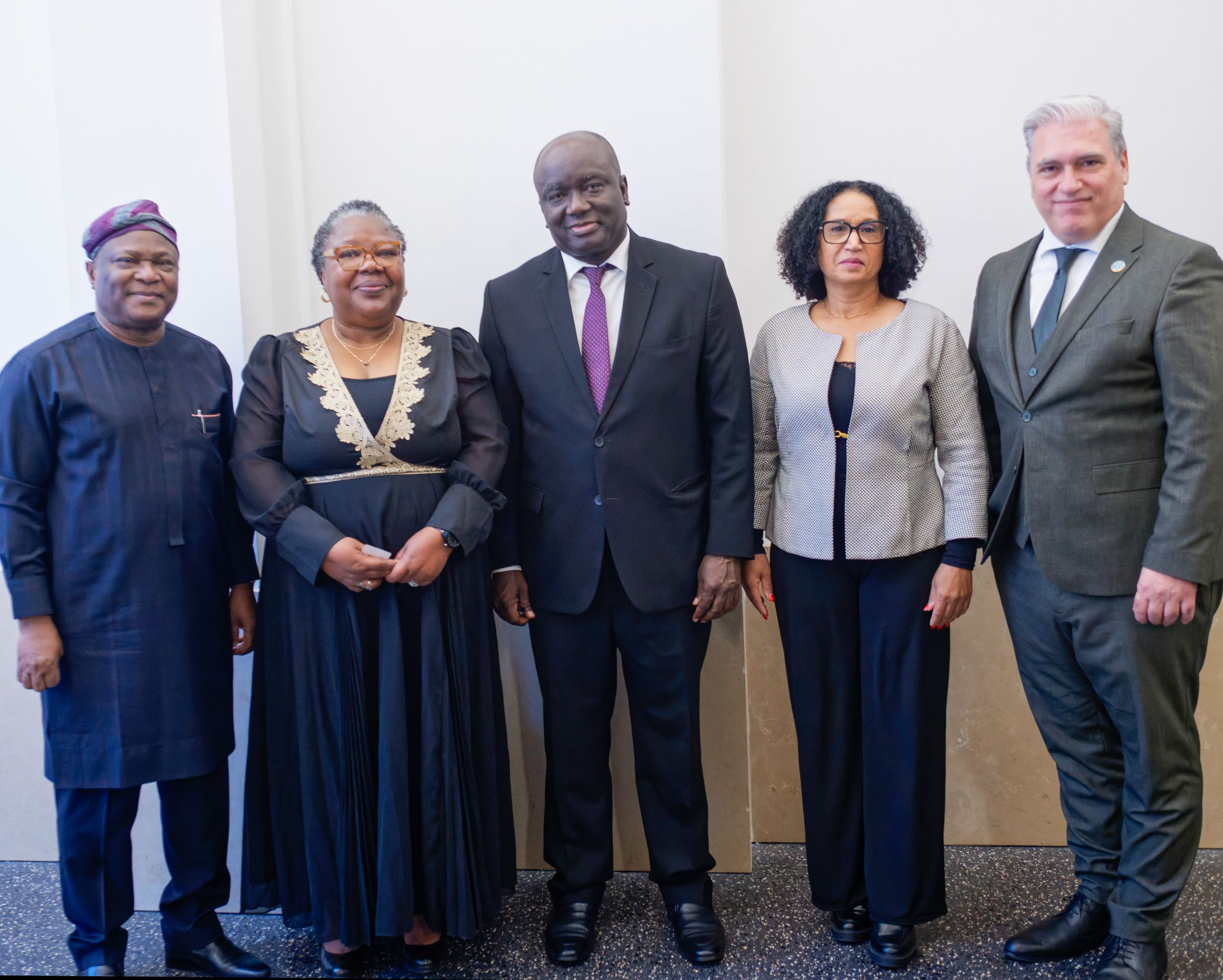
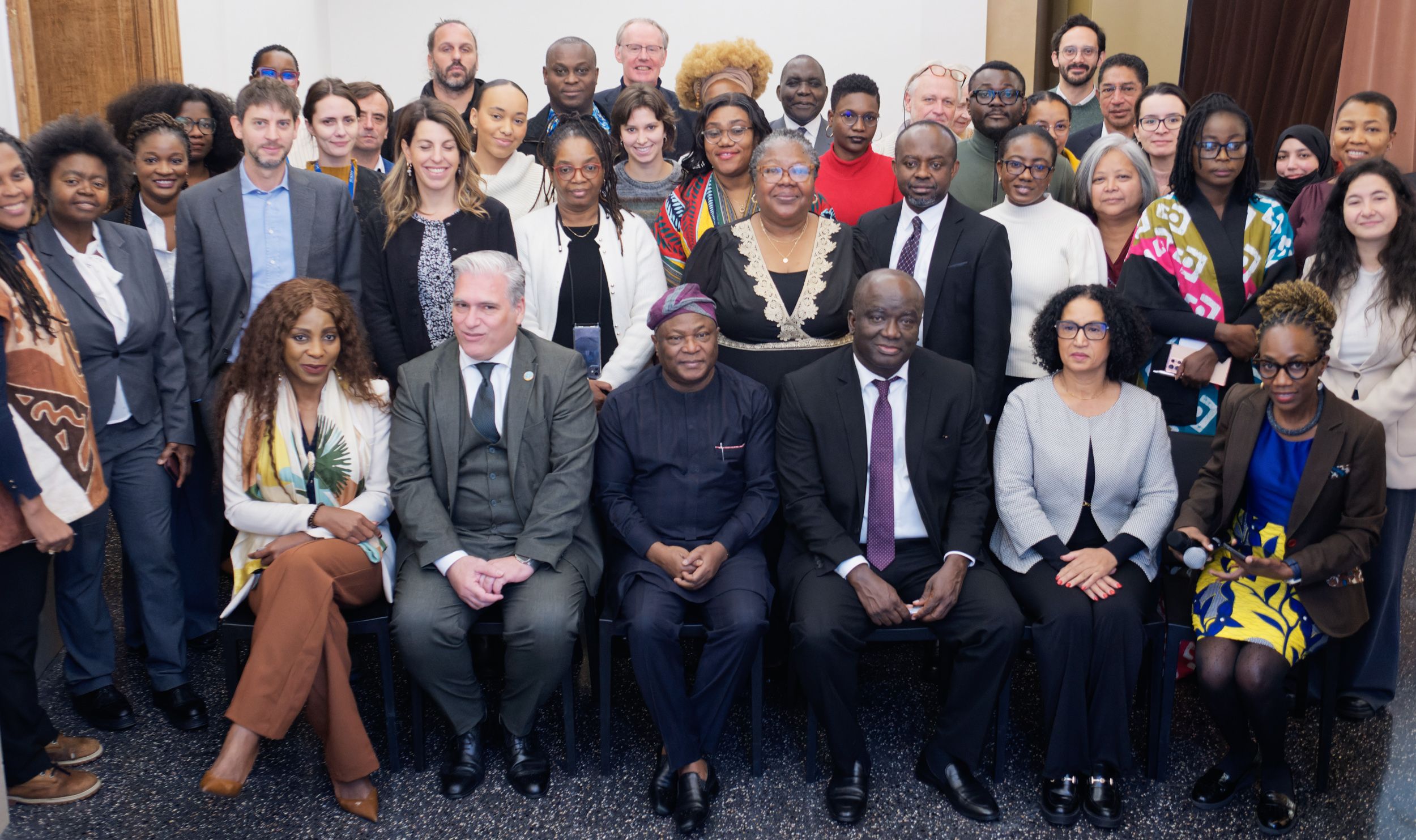
Picture one: His Excellency Dr Adebayo Emmanuel Adeyemi, Nigerian Ambassador to Belgium, Dr Maureen Duru, Founder of the Food Bridge vzw, His Excellency Henry Tachie-Menson, Ghanaian Ambassador to Belgium, Ms Latifa Ait-Baala, member Brussels parliament and Mr Raschad Al-Khafaji, Director of the FAO Liaison Office with the European Union and Belgium. Picture2 : participants opening session. pictures by claus_siebeneicher
The 10th African Diaspora Agrofood Forum (ADAF26), organised by The Food Bridge vzw, concluded successfully in Brussels, bringing together stakeholders committed to strengthening African diaspora participation in agrofood entrepreneurship, investment and sustainable development.
In her welcome remarks, Maureen Duru, Founder of The Food Bridge vzw and Convener of the African Diaspora Agrofood Forum, reflected on the African diaspora entrepreneurship ecosystem, the changes in international development funding and the opportunities it presents for African diasporas. As she stated , reimagining remittances does not mean diverting money intended to support families and communities, rather it means exploring how diaspora members who wish to invest can be supported to channel a portion of the resources they send home into impactful investments in agrofood enterprises. However, such diaspora investments require credible, transparent and professionally managed investment structures that can safeguard diaspora investments, reduce risks and create opportunities for sustainable returns on investment
She also highlighted the changes in international development financing and stated that this can be an opportunity for African diasporas to play a greater role in closing funding gaps and reducing dependence on foreign aid. Furthermore, with the growing global interest in African indigenous crops and their nutritional potential, she also called for greater diaspora participation across the agrofood value chain, from production and processing to marketing and international trade. She encouraged diasporas to engage with the Collective Action on Forgotten Foods (CAFF) and explore investment opportunities in indigenous and underutilised African crops.
Strengthening Institutional and Entrepreneurial Partnerships
ADAF26 had the priviledge of welcoming to the event, His Excellency Dr Adebayo Emmanuel Adeyemi, Nigerian Ambassador to Belgium, and His Excellency Henry Tachie-Menson, Ghanaian Ambassador to Belgium, who shared insights into government policies and opportunities for diaspora engagement and investment.
Mr Raschad Al-Khafaji, Director of the FAO Liaison Office with the European Union and Belgium, highlighted FAO initiatives engaging diaspora communities in sustainable development.
Mauro Martini of IFAD shared examples of successful diaspora-led initiatives mobilising remittances and diaspora investments to support productive activities in countries of origin, highlighting the importance of structured mechanisms.
Experienced African diaspora entrepreneurs also shared valuable lessons on building professional business structures, accessing expertise, developing partnerships and navigating business challenges.
Turning Conversations into Business Opportunities
The second day featured practical workshops and interactive sessions facilitated by ZidiCircle, EUDiF, ALEFA Diaspora and the Collective Action on Forgotten Foods. ZidiCircle introduced participants to collective diaspora investment opportunities in Africa, while EUDiF shared experiences of supporting diaspora-led development initiatives and building sustainable partnerships.
An interactive entrepreneurship session generated at least four potential business connections, demonstrating ADAF's commitment to connecting entrepreneurs with opportunities for growth. Participants also enjoyed an innovative tasting experience featuring Attiéké Ladou, developed by entrepreneur Lucie Adou, showcasing the potential of African traditional foods in contemporary markets. Discover her products at www.ladou.eu.
Building on Ten Editions of Impact
ADAF26 reaffirmed the importance of recognising African diasporas not only as remittance senders and consumers, but also as investors, entrepreneurs, innovators and strategic partners in transforming African food systems.
We extend our sincere appreciation to all our distinguished speakers, panellists, moderators, entrepreneurs, exhibitors, participants and partners, including Francois Stepman, Paddy Siyanga Knudsen, Mirana Rojaharison, Nathalie Cordas, Mary Ngu and the African Non-State Actors Platform, for their valuable contributions and support.
As we celebrate ten editions of connecting people, food and opportunities, The Food Bridge remains committed to promoting indigenous African foods, strengthening diaspora entrepreneurship and facilitating equitable partnerships. Our goal remains clear: to move beyond dialogue towards partnerships, investments and actions that deliver lasting impact.
The ADAF26 Forum Report will be published soon, highlighting key discussions, recommendations and opportunities for future collaboration.
The Food Bridge vzw | www.thefoodbridge.org
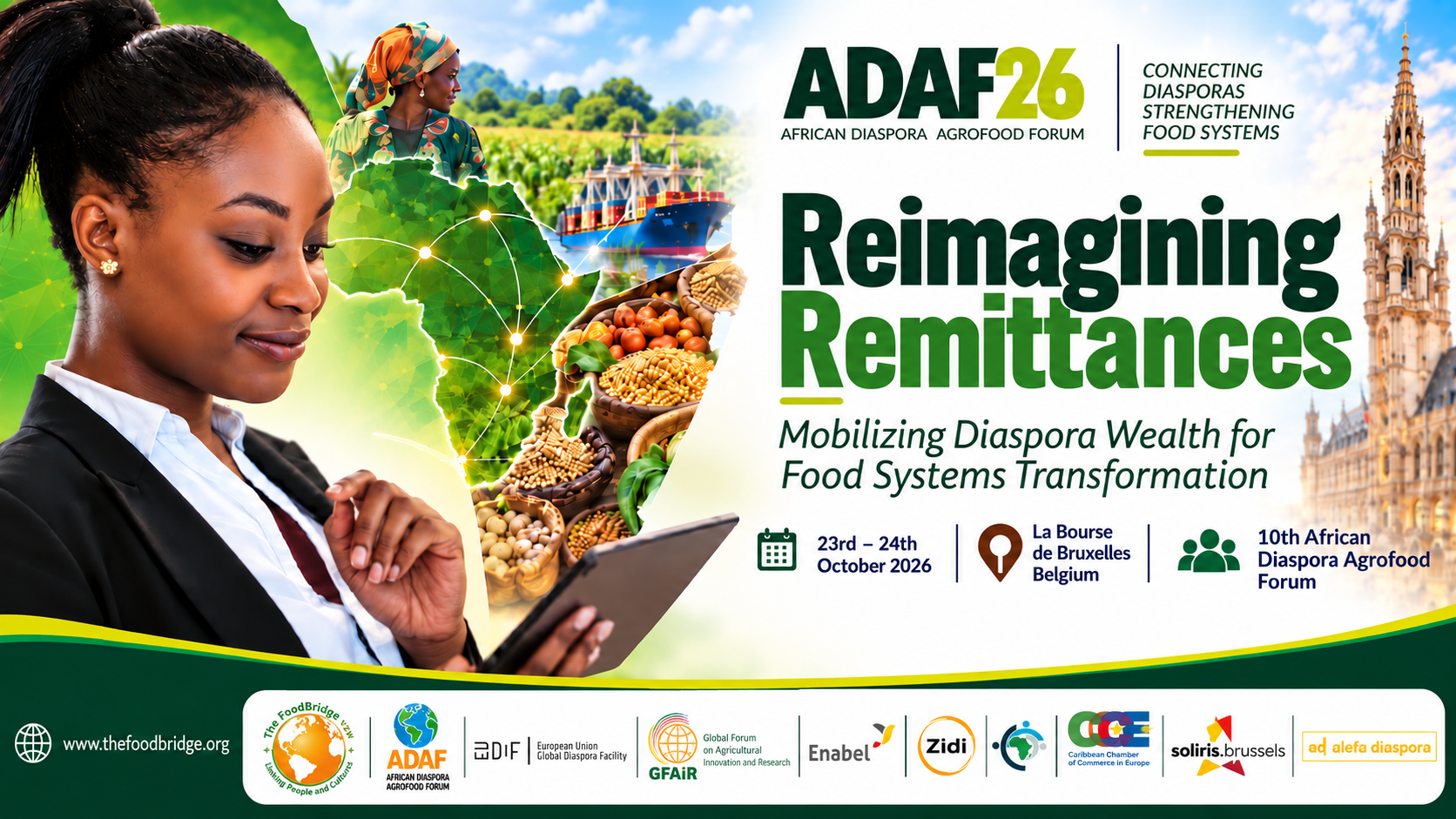
Marking a decade of dialogue, networking and collaboration, the 10th edition of the African Diaspora Agrofood Forum is a dynamic platform for meaningful discussions, fresh perspectives, strategic partnerships and actionable solutions to advance African diaspora agrofood entrepreneurship. This event brings together entrepreneurs, policymakers, investors, researchers, development partners and other key stakeholders, to explore how diaspora entrepreneurship can contribute to transforming Africa's food systems, creating economic opportunities and strengthening connections between Africa and global markets.
The theme of ADAF26 is Reimagining Remittances: mobilizing Diaspora Wealth for inclusive agrofood entrepreneurship and Food Systems Transformation. This edition will examine how the financial resources, knowledge, skills, networks and entrepreneurial potential of African diaspora communities, can be mobilised beyond traditional remittances to support sustainable businesses, investment and inclusive economic development.
This is a two-day programme with expert discussions, knowledge exchange, networking opportunities and an exhibition showcasing African diaspora agrofood businesses, innovative products and entrepreneurial initiatives. ADAF26 aims to move beyond discussions to foster concrete partnerships, investment opportunities and collaborative actions that can deliver lasting impact.
Event Details
Dates: 23–24 October 2026
Venue: Bourse Building, Brussels, Belgium
Registration and Exhibition Opportunities
Registration remains open for participants and exhibitors!
Whether you are an entrepreneur seeking new markets, an investor exploring opportunities, a policymaker interested in diaspora engagement, or a development partner looking to build strategic collaborations, ADAF26 offers a valuable platform to connect, exchange ideas and explore opportunities.
Participants: Register here for ADAF26
Exhibitors: To showcase your products, services or initiatives, please contact This email address is being protected from spambots. You need JavaScript enabled to view it. or This email address is being protected from spambots. You need JavaScript enabled to view it..
The tentative programme is now available. We invite you to explore it and be part of the conversation: https://lnkd.in/p/eFUTU-Ad
Compendium
Upcoming Events
The Helping Hand Project
In collaboration with Kwabre Ne Sekyere Belgium,Mfantesman vzw,Voice of Women International, Kente FM and other African organizations, we are organizing "The Helping Hand project",is an action started in 2016, aimed at feeding the homeless in the Brussels area. We are in need of volunteers to help with the cooking, packing and distribution of food to the homeless and needy. We are also still looking for sponsors for this project. We do not accept funds but prefer sponsorship in the form of donations of desired food items, food packaging materials. if you are interested in giving a helping hand, contact us on This email address is being protected from spambots. You need JavaScript enabled to view it.
Latest News
 During the Tasting the Forgotten Foods event, one of the highlights was the official launch of the... More detail
 From 15–17 March 2026, the international food industry will gather again at Tavola 2026, hosted... More detail
 The 14th edition of the Gent Smaakt Food Festival will take place from 13 to 17 May 2026. Gent... More detail
 For the first time, two visionary women have been jointly honored as the 2025 African Diaspora... More detail